Preventing and Alleviating Osteoarthritis
What is Osteoarthritis?
age-well.org > age related diseases > osteoarthritis
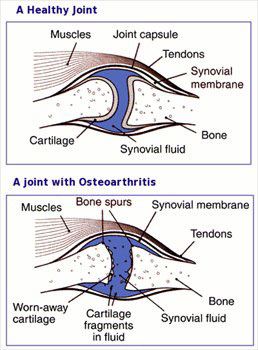
Osteoarthritis is a degenerative disease characterized by the breakdown of cartilage in the joints. Without their cushion of cartilage the bones rub against each other causing pain, inflammation and loss of movement. People often link this disease with aging, putting it down to general "wear-and-tear" but, although we do not know exactly what causes the disease, it does not seem to be a fatality of old age, or caused by aging, although most people suffer from this disease to some extent as they age.
People with old sport or work-related joint injuries seem to be more prone to the disease. Obesity definitely raises the odds of suffering from this disease, as a higher body mass index puts more stress on the joints. The wearing of high-heeled shoes tends to also be a trigger, because too much stress is put on the knees and feet.
Different races seem to be more prone to this disease than others, although the disease occurs worldwide. Although the disease is more common in young men than it is in young women, more women than men appear to be affected, over the age of 50,
Heredity also appears to play a big part in the development of Osteoarthritis, particularly in the hands and hips. This has been born out by various research projects, some of which suggest that genetic abnormalities in the structure of cartilage and collagen genes can trigger the disease. There is also evidence that there is a gene that makes females more susceptible to this type of arthritis and also causes bony lumps on the end of finger joints.
The condition is also sometimes called wear-and-tear arthritis, although more technically the doctor might tell you that you have degenerative arthritis, and degenerative joint disease (DJD)
Symptoms of Osteoarthritis
Not every person who suffers from the disease has symptoms. When present, these range from mild to extremely severe, affecting weight bearing joints such as knees, feet and hips and the back, as well as the hands. Besides pain in the affected joints, patients experience stiffness and loss of mobility, which can eventually lead to trouble walking. Inflammation in the joints is often present. The pain is often worse in humid weather and patients experience more problems during the night due to inactivity. Any long periods of inactivity lead to stiffness.
Patients are usually less bothered by the disease in warm, dry climates and are helped by keeping active, getting enough exercise and doing stretching classes. The pain usually decreases with time.
It is usually possible to distinguish osteoarthritis from other joint diseases because its progression is specific. It usually occurs in older people, is usually located in only one or a few joins, there is less inflammation than in other arthritic conditions and the pain progresses gradually.
A Progressive Disease
It is important to understand that osteoporosis is a progressive disease and it can vary greatly from one person to another. There are different stages ranging from 0, when there may be no symptoms at all or mild pain, to severe, when there will be extensive pain and many joints could be effected. Daily activities may be difficult or impossible to do. Stiffness, swelling, and inflammation can also be severe.
THe time it takes for the condition to progress may also vary greatly.Although it mainly affects old people, it is possible to have early-onset osteoarthitis.
Symptoms will vary depending on the age when the disease starts, the person's weight, medical history and other health issues the patient is living with. It's progression may also depend on whether it is an inherited condition, caused by injury, or a mixture of both.
Although you may begin treatment with noninvasive options, such as OTC medications and lifestyle changes, you may need to reasses your options for stronger alternatives as symptoms continue to get worse.
As with many other progressive diseases, the amount of time it takes to reach subsequent stages can vary from person to person. At each stage, it is important to research and discuss your symptoms and treatment options with your doctor and other health professionals who have been involved in your treatment and understand your body and the challenges you are facing.
Discuss the potential side effects of treatment with your healthcare provider as the disease progresses. It is important to understand all of your choices before making a decision about how you will manage your Ostearthritis in the best way possible for your own personal situation.
Read more about the different stages of Osteoarthritis here.
Diagnosis
Dagnosis is often made based on a physical exam as well as an analysis of the symptoms. An x ray can confirm the diagnosis in people over 60, when the disease has progressed enough to show up on the x-ray.
If your doctor suspects you have arthritis, he or she may use an MRI magnetic resonance imaging (MRI) test to diagnose the condition and rule out other possible causes for your ailments. An MRI uses computer-generated radio waves and a magnetic field to obtain images of organs, tissues, and other structures in the body. These images are much more detailed than other imaging tests, such as x-rays or ultrasounds. If there is any uncertainty, blood tests can rule out other forms of arthritis.
The Four Stages of Osteoarthitis
Three Things You Must Do to Prevent Osteoarthritis
There are several things that you can do to prevent Osteoarthritis slowing you down as you age:
Weight control prevents extra stress on weight-bearing joints, thereby decreasing the risk for developing the disease.
Exercise maintains joint flexibility and improves muscle strength. By strengthening the supporting muscles, tendons, and ligaments, regular weight-bearing exercise helps protect joints, even possibly stimulating growth of the cartilage.
Estrogens may promote healthy joints in women according to Recent Studies that suggest that hormone replacement therapy may significantly reduce the risk for postmenopausal women developing osteoarthritis, particularly in the knee.
Vitamins and Supplements
If osteoarthritis has already developed, the above vitamins and supplements can diminish the symptoms of osteoarthritis, reducing pain, stiffness and swelling. A person with the disease should consult with a doctor before using dietary supplements to treat it. The medical practitioner may prefer to prescribe one of the various pain control medications, including anti-inflammatory drugs and painkillers such as aspirin, paracetamol, and ibuprofen. For inflamed joints that are not responsive to medication, infiltration of glucocorticoids may be helpful. Patients should avoid putting stress and strain on painful joints.
Surgery may be needed to relieve chronic pain in damaged joints. Osteoarthritis is the most common indication for total joint replacement of the hip and knee.
Joint Replacement - New Methods and Prognosis
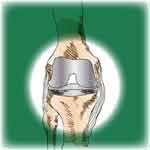
As people live longer, there will inevitably be an increased need for joint replacements and other treatments for this painful disease. At the moment there is a wealth of new cutting edge treatments becoming available as years of research into treatments bear fruit.
Age-well.org will try and keep you up to date with these new developments as they arise. We will also be making available an e-book about osteoarthritis and the different things you can do to relieve the symptoms as well as in-depth information on the new technology available. Drop me a line at agewell@bluewin.ch if you want to know when this ebook becomes available.
In the meantime here are a few links which will bring you up-to-date with the information available at present:
The Future looks bright for joint replacement
New Trends in Joint-Replacement
Take Glucosamine and Avoid Joint Surgery
Resources
Sciatica is often related to arthritic change. Learn all about
sciatica from arthritis from a real patient.

age-well.org > age related diseases > osteoarthritis
Top of Osteoarthritis
Back Disease Prevention
Age-well.org
 Subscribe To This Site


Subscribe to E-zine
Table of Contents
|
|
|
The Spinal Column & Back Problems
|
|
The Human Spine
|
|
Back Problems
|
|
Lower Back Pain
|
|
Herniated Disc
|
|
Piriformis Syndrome
|
|
Piriformis Test
|
|
Piriformis Exercises
|
|
Chiropractic Treatment
|
|
Acupuncture for Lumbago
|
|
Back Care
|
Related Issues
|
Osteoarthritis
|
|
Joint Replacement
|
|
Osteoporosis
|
|
Drink Plenty of Water
|
|
Incontinence
|
Free Back Pain Relief Offers
Free Back Pain Relief Offers


Links to Related Pages
Links to Related Pages



New! Comments
Have your say about what you just read! Leave me a comment in the box below.