Subscribe To This Site


|
Dry Eye SyndromeOtherwise Know as Dry Eye or Dry Eyesage-well.org > eye care > dry eye by Michelle Botes Tears are nature's lotion for the eyes. The eyes see better for being washed with them. . . . Christian Nestell Bovee What is Dry Eye ?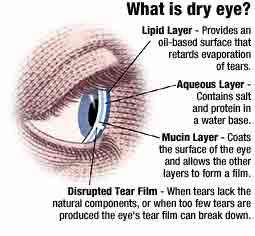
Dry eye syndrome is probably one of the most common eye problems that occur and is easily treated. Dry eyes occur when the tear producing glands in the eyes do not supply enough moisture to lubricate and cleanse the eyes naturally. These glands produce less and less moisture as we age and therefore dry eye syndrome is common amongst older people who need to be extremely careful with eye care. Other factors that may bring about, or aggravate dry eyes is decreased blinking, such as when you work on a computer for prolonged hours, reading or watching television. Air conditioning is a big contributor to dry eyes as well as certain medication such as birth control pills and anti-histamines. Some studies have also shown that women are more prone to dry eye syndrome because of hormonal fluctuations. Symptoms of Dry Eye SyndromeThe common symptoms include:
Treatment of the SyndromeThe treatment for dry eyes is fairly simple and with a few changes in your environment, you can minimize the discomfort. Lubricating eye drops or artificial tears can be an effective treatment for dry eyes. These drops can be purchased over the counter, but it is best to consult with your eye care professional prior to purchasing any product, as they can advise which will be the most effective. Lubricating gels and ointments is also available that has a longer lasting effect than drops. Air filters to clear out dust and pollen from the air inside your home or office can significantly reduce the discomfort of dry eyes. Limiting the use of your air conditioner or slowing the speed of a fan. Movement of air aggravates dry eyes and by reducing the movement, you might ease the effect on your eyes. Wearing sunglasses when outside is an effective way to keep dust and pollen out of the eyes. If you live in a region where the sun is very strong, sunglasses need to be part of your daily eye care routine. During winter months, radiators and heaters dry the air out. The use of a humidifier can increase the humidity. In extreme cases, plugs can be planted into the tear drains on the lower eyelid. These plugs will stop all the moisture from draining and keep the eyes moisturized. When reading, watching television or working on the computer, take regular breaks to rest your eyes. Read or work under sufficient lighting. Reading or working in the dark causes strain on the eyes and may cause damage or aggravate this syndrome. Stop smoking or don’t start Smoke irritates the eyes and can cause dry eye syndrome. Drink plenty of water. We all know that water ensures that the body has enough moisture; this is also true for the eyes. Water is one of the most important ingredients of successful eye care and is one of the most effective treatments for dry eyes.
Image Sources age-well.org > eye care > dry eye TOP of dry eye syndrome |
Translate this Site

Search this Site
Care For Your Eyes
List of Eye Conditions
Subscribe to Our E-NewsOther Conditions
Develop Smart Habits
|
|||||||||||||||||||||||||||||||||||||||||||||||||||||
|
|
|||||||||||||||||||||||||||||||||||||||||||||||||||||